Category: Portraits

  • Graduation Portraits

    Graduation Portraits

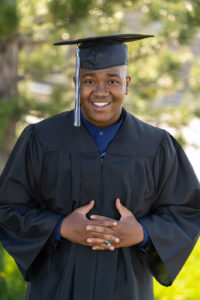
    Graduation portraits are a great way to remember one of the most iconic moments in your son or daughter’s life. It marks the passing from childhood to the next phase in their lives. And what better time to take a portrait when they’re all dressed upend looking their best?

    I also like capturing candid moments of the graduate as they meet friends and and family before the ceremony. It adds a unique flavor to the portrait session. And as always, I use a little flash to make the portraits pop.

    I charge $125.00 to do a graduation portrait session. You’ll get a mixture of great portrait images and fun candids. You can even order a memory mate book to commemorate the occasion. Call 303 478 7586 to book your graduation portrait session today.

  • Outdoor Portrait Lighting

    Outdoor Portrait Lighting

    There are a variety of lighting techniques a photographer can use for lighting an outdoor portrait, ranging from using existing light (incident) without any artificial light enhancement to studio strobes equipped with light modifiers. This article discusses a few of those techniques and tries to show the differences between using each of them. Knowing what lighting technique the photographer will be using is critically important for the customer as well in trying to decide between photographers. Different customers have different “looks” they are after and knowing what technique produces each look will assist the customer in making the correct decision on a photographer. FYI, if you are a customer desiring a well-balanced, evenly lit portrait, don’t hire a photographer who shows up to the job holding just a camera. They won’t get the desired effect you’re after. Photographers who are comfortable using all of the above techniques, rather than just specializing in one, can broaden their appeal to customers as well.

    Incident Light

    The first technique I want to discuss is using available light or incident light to create a portrait. This is the easiest technique to use for the photographer because little or no extra equipment (besides the camera) is often needed. It is perhaps the most difficult, however, to achieve the desired end result–a well-exposed portrait. Some very experienced environmental portraiture photographers can achieve beautiful results using a combination of reflectors and diffusers, but this increases the amount of equipment (and assistants) needed to take the photo.

    The biggest hurdle that has to be overcome with this technique is the huge contrast range between the background and the person’s face. As can be seen from the two photos below, this means that either the background is properly exposed and the person’s face is in shadow, or the reverse is true.

    Incident light portrait exposing for subject’s face
    Incident light portrait exposing for background
    Incident light exposed for subject’s face

    As you can see, the contrast is too much for the camera to handle. Either the background or the person’s face looks properly exposed. This can be handled in one of three ways–exposing for the background and adding light with a reflector to fill in the shadow, exposing for the background and adding artificial light with a flash, or waiting for a cloudy day to cut down the contrast (problematic in a place like sunny Colorado). I’ll discuss a couple of ways how to use flash to fix this. I’m not the biggest fan of reflectors since it requires an assistant to hold one (wind often blows the reflector out of position if just a stand is used to hold it), and their use often causes the subject to squint as you shine light back into their face. When done properly, however, the effect can be stunning as nice warm light is reflected onto the person’s face to fill in the shadows.

    On-Camera Flash

    The smallest and simplest way to fix the lighting conundrum above is to use a flash positioned atop the camera (these flashes which fit onto the hot shoe are known as speedlites). The idea is to add a small pop of light onto the subject’s face to balance out the portrait. While on-camera flash gets the job done, the results can be rather crude. As you can see from the examples below, the lighting is flat since the flash is fired directly at the subject.

    Exposing for background using on camera flash
    Exposing for the background using an on-camera flash

    Off-camera Flash

    If you want to add dimensionality to the person’s face, the flash has to be taken off camera and positioned more to the side. Think of a Rembrandt portrait, for instance. The light does not fall directly on the subject but comes from the side to give the face a more distinctive look. There are a number of ways to achieve this side lighting effect. The first involves simply turning the flash that is sitting atop the camera to the side and bouncing it off a white reflector. Again, I’m not crazy about reflectors outdoors, so the better solution IMHO is removing the flash from the camera altogether and placing it atop a light stand. You can use the same speedlite or a more powerful battery-powered strobe for this purpose. And while strobes are a lot heavier and bulkier, they have far more power to allow for the use of bigger light modifiers which can produce striking results.

    Bare bulb flash

    The first way to do this is position a flash to the side of the subject without use of any light modifiers. This adds dinesionality but the look is a little harsh.

    Off-camera flash without modifier
    Off-camera flash without modifier

    Off-Camera flash with modifier

    A far better way to use off-camera flash is to attach some sort of modifier to the flash to soften the light. Think of holding a white sheet over your head on a sunny day. The light becomes much softer. For outdoor use, I prefer either a shoot through umbrella (a translucent umbrella that is placed in front of the flash) or a beauty dish or octagonal softbox. Now as you can see below, the light quality softens but the light directionality is still maintained.

    Off-camera strobe with shoot-through umbrella
    Off-camera strobe using shoot through umbrella
    Off-camera strobe with beauty dish

    So the next time you take a portrait outdoors, try one of the above techniques to improve your photography. Or better yet, the next time you hire a photographer for an outdoor portrait, you’ll know what questions to ask the photographer about what equipment he or she will be using so you can be more confident in getting the results you want.

  • Broomfield Family Portraits

    I had the pleasure of taking family portraits of Megan, Adam, Knox, and Harper in Broomfield recently. Harper and Knox were more than up to the task of having their picture taken. Harper even spontaneously plopped down to have a little fun posing on her own. I love those moments as a photographer. We chose to do the shoot in a park near the Anthem Ranch Rec Center. The lake provided a nice backdrop for the photos and was a fun place for the kids to explore while not taking photos.

    When taking family photos, I like to use relaxed poses and ones that don’t take a lot of time to demonstrate. My primary focus is of course making sure my subjects look good but also won’t be difficult for kids to get in and out of. Making my subjects feel comfortable is another priority. I try to mix up the types of shots I’m taking as well as the people in the group. I took portraits of the entire family, mom and kids, the brother and sister together, and each child. I also know that kids are usually going to have a limited attention span, so I purposefully placed a portrait session with just mom and dad in the middle to give the kids a break.

    After a cool, rainy spring, it was nice to finally have a sunny warm day to shoot although I often like more clouds to cut down on the contrast. Due to the contrast, I used two 500 W/S strobes with translucent umbrellas as modifiers. This helped light my subjects’ faces and eliminate shadows.

  • Family Reunion at Chautauqua

    I recently shot family reunion photographs at Chautauqua in Boulder.  The park provides a great backdrop for portraits, including deep shade, plenty of foliage for backdrops, and a view of the Flatirons.  I shot both full group shots with over 20 people and smaller group shots of individual families.  Organizing a large photo shot can be challenging.  Many issues can derail a photo shoot of this size, including grumpy kids and tricky lighting.  Family portraits involving 10 children is also challenging.  Most importantly, the subjects aren’t professional models so getting people into proper poses has to be done quickly.

    Given that I was using heavy shade for most of my poses, I used my Dynamite Baja B4 lights to open up the shadows. These work well since they are battery-operated. I didn’t use other light modifiers to keep things simple.  All-in-all, the portrait shoot was a success and the people who had come from out-of-state enjoyed the scenery of the park.

  • Fall Portraits

    I love shooting fall portraits.  Fall color can provide some beautiful backgrounds.  The quality of light is also softer as the sun is lower in the sky.  One of the keys is to photograph the subject in the shade with the subject backlit by the sun.  The leaves will also look better as they will be backlit as well.

    boys portrait


    I shot this portrait of two brothers near Vail, Colorado using this theory.  I shot it with a 70-200 2.8 lens with a polarizing filter.  The filter cuts out two stops of light so I can use a wider f stop to blur the background more.   I try to set shutter speed and ISO to where the ambient light is measuring neutral.  I don’t want to overexpose the background too much or I’ll white it out.  This can be a problem on sunny days.  I may even have to use a stronger neutral density filter to lower the shutter speed enough so I can use a flash.  The maximum flash sync on my camera in only 1/200 second.  I used a flash with a soft box mounted on a light stand to provide fill light and catch light in the eyes.  When using a soft box it is important to remember to set the flash compensation to +2/3 or +1 since it has a layer of fabric to shoot through.  One of the final steps is to make sure that neither of the tree trunks in the background looks like it is coming directly out of the head of one of the boys.  This can be a distracting element to a portrait.

    senior portrait girl


    In this example, I was shooting a senior portrait.  My client wanted fall color in the shots.  We went up to the summit of Kenosha Pass near FairPlay for the shoot.  I had my subject rest against a rock with the sun at her back.  Again, it backlit the aspen leaves and works as a natural hair light, just rimming the back of her shoulders and head.  I used a little narrower aperture to give more detail to the aspen behind her.  Again, I was using a flash mounted on a light stand to provide fill.

    Have fun shooting your own fall portraits or call 303 478 7586 to set up your session today.

  • Fashion Photography

    Recently I had the opportunity to attend the Look Fabulous fashion photography tour presented by Lou Freeman and Lindsey Adler.  It was a fun workshop and I learned a lot about lighting.  I got a chance to experiment with some cool poses and different lighting techniques.  My favorite was a three-way reflector that provides some beautiful soft light on models’ faces.  I can’t wait to adopt some of these techniques in my wedding and senior portrait work.


Plugin from the creators ofBrindes Personalizados :: More at PlulzWordpress Plugins